In this story 5 sections
In most Hindu families, the wedding date is not simply picked from a calendar — it is chosen. The muhurat, or auspicious time, is worked out from the couple’s horoscopes and the Hindu calendar, and once it is fixed almost every other plan follows from it. Here is what families usually consider when choosing a season and date.
Why the muhurat comes first
The muhurat decides not just the day but often the time of the pheras — which may fall late at night or in the early morning. That affects your venue booking, lighting, catering schedule and even how long guests will stay. Speak to your family pandit early, and ask for two or three suitable dates so you have options when booking.
The busy wedding seasons
Across North India, the most popular wedding months are roughly November to February, with another busy stretch from April to June.
- Winter (November–February): comfortable for outdoor lawns and long functions, but venues and vendors book out fastest.
- Summer (April–June): more availability and sometimes better rates, but plan for the heat with evening functions, cooling and shaded seating.
On the most popular muhurat dates, many weddings happen in the same city on the same night. If your date is one of them, book your key vendors as soon as it is fixed.
Periods many families avoid
Traditionally, many families avoid marriages during certain parts of the year. Two of the most widely observed are:
- Kharmas — roughly mid-December to mid-January.
- Chaturmas — about four months from Devshayani Ekadashi (June or July) to Dev Uthani Ekadashi (October or November).
Exact dates shift every year with the lunar calendar, and customs differ between families and communities, so always confirm with your pandit.
Matching the season to your plans
Once you know your season, plan the setup around it:
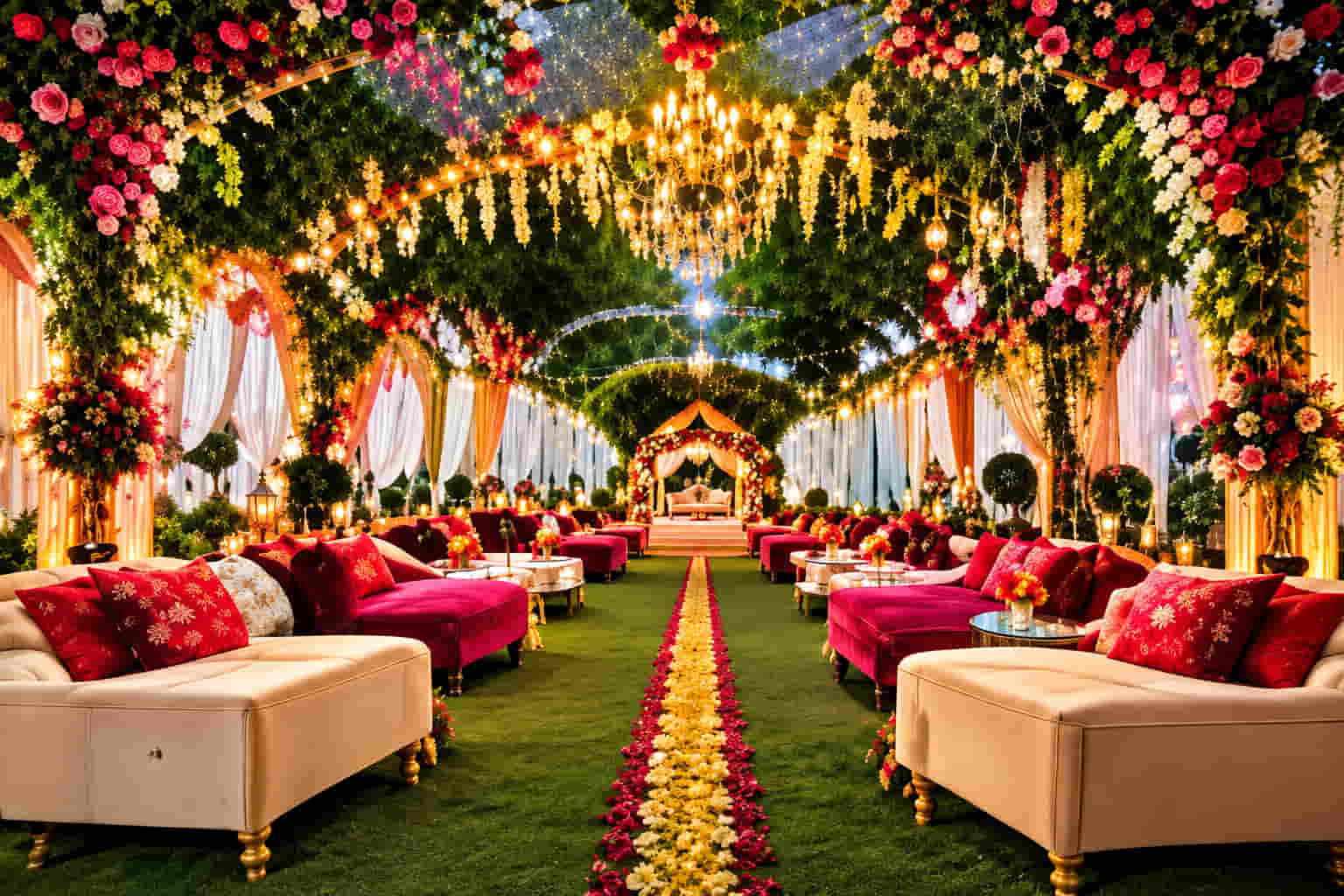
- Winter: covered tents with side walls, heaters, and warm lighting for late-night pheras.
- Summer: evening functions, cooled tents or halls, and plenty of water stations.
- Any season: a rain backup for open-air functions, because the weather can surprise you.
Book early once the date is fixed
The moment your muhurat is confirmed, start booking — venue, tent and catering first, then decor and music. A date that looks months away fills up surprisingly fast in peak season. Share the exact ceremony timings with every vendor so the lights, food and music are ready when the moment arrives.